
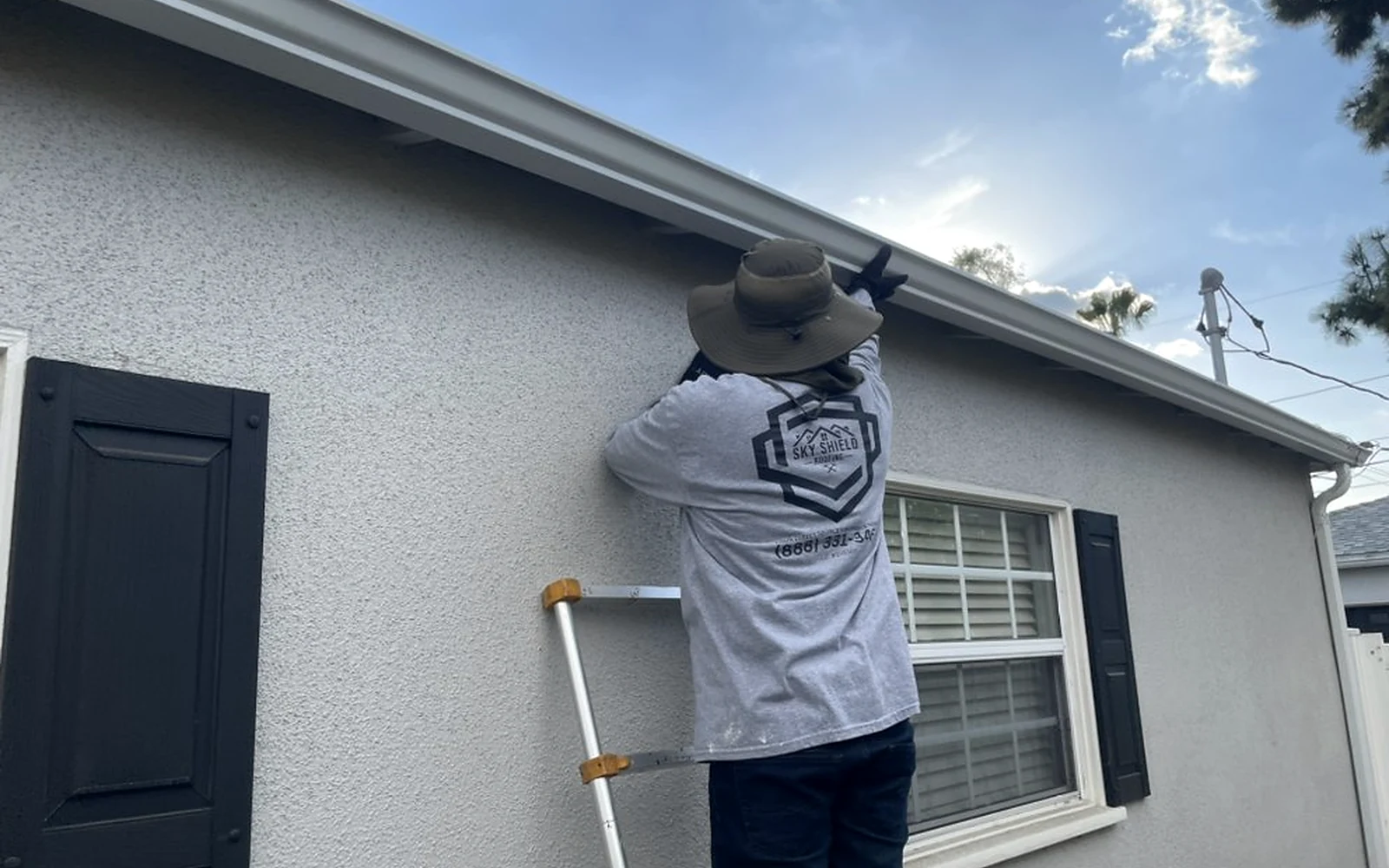
Decision Guide
Start with the condition, not a sales assumption
Gutter guards can reduce some debris entry, but they do not eliminate maintenance or correct poor pitch, undersized outlets, weak hangers, concentrated valley flow, or unsafe discharge locations. This guide explains the conditions a Los Angeles-area owner can observe safely, what a roofing professional needs to verify, and how those findings shape a clear gutters scope.
Overflowing gutters during rain
Start with the visible condition and when it changes.
Gutter repair or replacement
Connect the symptom to the surrounding roof assembly.
Compare focused and broader work
Choose the next gutters step from documented findings.
When a targeted scope remains reasonable
Localized symptoms, serviceable surrounding materials, sound attachment, and a repair area that can be tied in cleanly can support a focused recommendation.
- Overflowing gutters during rain
- Water marks on fascia or stucco
- Loose, sagging, or pulling gutter runs
When the risk extends beyond one spot
Repeated leaks, brittle or incompatible materials, widespread wear, trapped moisture, failed transitions, or compromised substrate can make a narrow repair unreliable.
- Gutter repair or replacement
- Downspout placement review
- Fascia and roof-edge coordination
- Slope and flow correction
Decision Path
How a gutters question becomes a clear scope
This is a planning flow, not a performance score. Each step narrows uncertainty before work is approved.
Define the visible condition
Check surrounding material and risk
Set focused or broader work limits
Confirm details, changes, and closeout
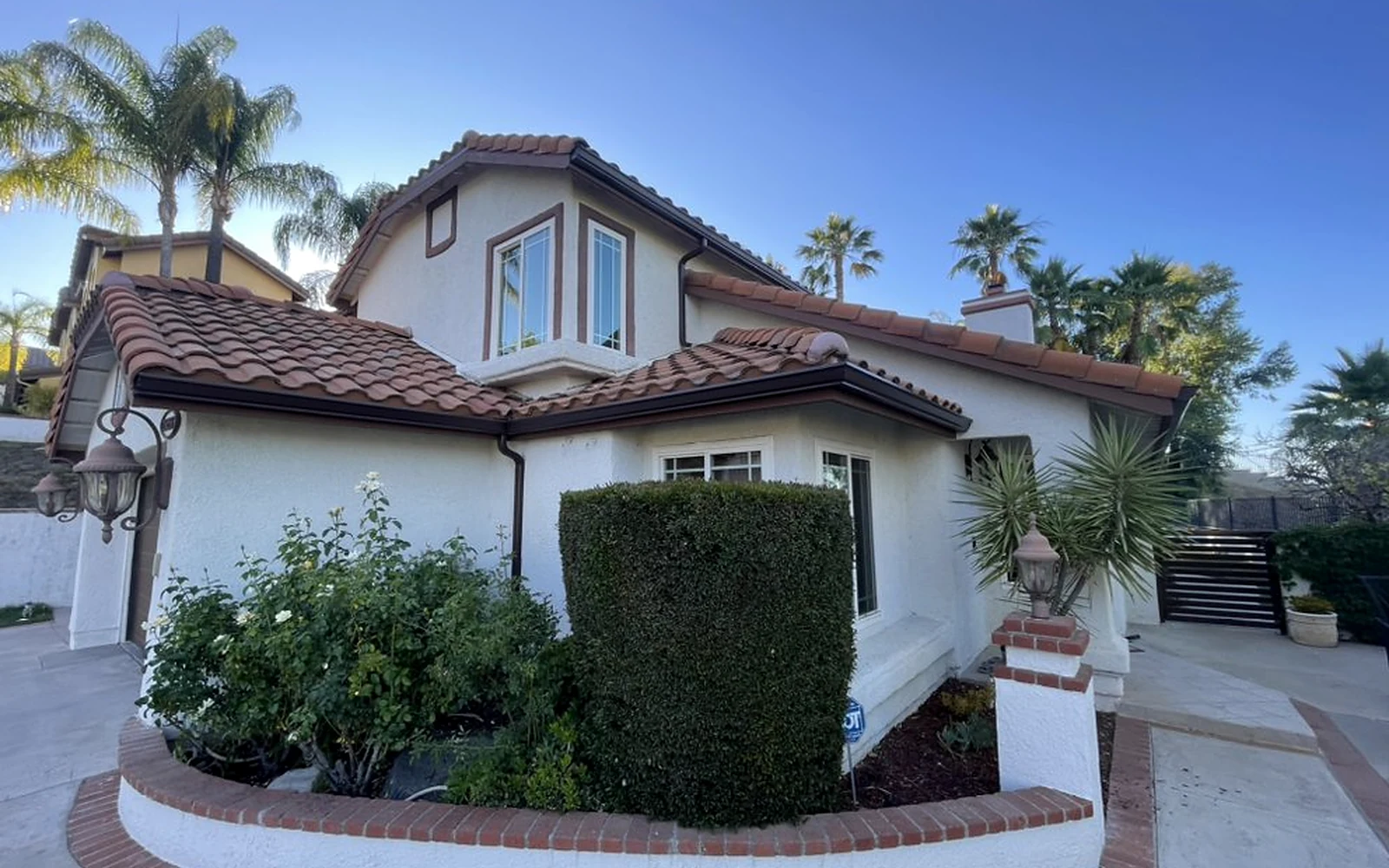
Completed seamless aluminum gutters on a documented Stevenson Ranch project. The surrounding details matter because a durable recommendation must work with the complete roof assembly.
Inspection Priorities
What the roof review needs to confirm
A professional should connect interior symptoms with exterior water paths, then document the roof field and the details most likely to change the decision.
- Gutter repair or replacement
- Downspout placement review
- Fascia and roof-edge coordination
- Slope and flow correction
- Leaf and debris prevention planning
- Condition of the surrounding roof area
- Access, protection, cleanup, and closeout requirements
Proposal Review
Questions to ask before approving the work
- What specific condition is the scope intended to correct?
- Which surrounding materials must remain serviceable for the work to hold?
- What hidden conditions could change the approved scope?
- How will flashing, drainage, penetrations, and edges be handled?
- What documentation, cleanup, and maintenance guidance are included?
Before And After The Review
A better decision is the first transformation.
Before the comparison
One visible defect is treated as the whole answer.
After a condition review
The recommendation explains what can remain, what must change, and why.
Guard Evaluation
Debris type and roof-water volume matter more than a universal product promise
Use these points to compare recommendations, ask clearer questions, and understand which findings can change the final scope.
- Leaves, needles, seed pods, roof granules, and the maintenance access available
- Roof area, valleys, gutter size, pitch, outlets, downspouts, and discharge locations
- How the guard integrates with the roof edge without lifting or damaging materials
- Cleaning requirements, overflow behavior, warranties, and safe inspection access
Common Questions
Questions to resolve before choosing the scope
Can this gutters concern be handled with focused work?
Possibly. A focused scope depends on whether the surrounding material, attachment, waterproofing, substrate, and connected details can support a reliable tie-in. The visible symptom alone is not enough to make that decision.
What findings could make the project broader?
Repeated symptoms, brittle or incompatible materials, moisture below the surface, damaged decking or substrate, failed transitions, poor drainage, or several weak areas can change both the recommended limits and the project sequence.
What information should I provide when requesting an estimate?
Share the property city, known roof type and age, where the symptom is visible, when it began, how weather affects it, prior repairs, safe photos, access constraints, and any sale, insurance, tenant, or scheduling deadline.
How do Los Angeles conditions affect gutters decisions?
Long dry periods can hide pitch and outlet problems until one strong rain concentrates water at a valley, roof edge, or undersized downspout. Gutters should be planned with the roof area, flow paths, fascia, drip edge, outlets, downspouts, and discharge location.
What should be documented after the work?
Keep the approved scope, material information, photos when available, written changes, cleanup or closeout notes, maintenance guidance, and the contractor or manufacturer warranty documents that apply to the completed work.
Decision Takeaway
A useful recommendation should leave fewer unanswered questions
Before approving work, you should understand the observed condition, the intended result, the limits of the scope, the materials being tied together, the details at edges and penetrations, how hidden conditions will be handled, and what happens during cleanup and closeout.
That comparison matters when proposals use different area limits or assumptions. Ask each contractor to identify what remains, what changes, how new work ties into the existing roof, and which conditions would require written approval before the scope or price changes.
- Observed condition and likely water path
- Repair or replacement limits with a reason for each
- Material, flashing, drainage, and attachment details
- Property protection, access, schedule, and cleanup
- Maintenance guidance and the next review point
Local Planning
How Los Angeles conditions affect the recommendation
Long dry periods can hide pitch and outlet problems until one strong rain concentrates water at a valley, roof edge, or undersized downspout. Good gutter work is part of roof performance. Water that is not moved away cleanly can shorten the life of the roof edge and surrounding exterior surfaces.
Gutters should be planned with the roof area, flow paths, fascia, drip edge, outlets, downspouts, and discharge location. The recommendation should explain how the proposed work addresses those connected conditions rather than treating one visible symptom in isolation.
Next Step
Get a condition-based gutters recommendation
Describe what you are seeing, when it started, and the city where the property is located. Sky Shield Roofing can help you plan the appropriate inspection or estimate.