Comparing roofing proposals
Compare the work included, not just the total price.
A repair proposal and a replacement proposal answer different questions. One addresses a defined part of an existing system; the other may include removal and rebuilding of a much larger roof area. Before choosing, compare the findings, boundaries, materials, allowances, and exclusions in each written scope.
If you have not yet had the roof reviewed, start with our homeowner’s inspection checklist. This guide is for the next stage: understanding the proposals after the condition review.
Check six scope details side by side.
| Scope detail | Targeted repair | Broader replacement |
|---|---|---|
| Work boundary | The specific leak, defect, and affected roof area. | The roof planes, structures, or complete system included. |
| Existing materials | Compatibility and a dependable connection to the retained roof. | Removal or retention requirements and the specified new assembly. |
| Decking | Inspection and repair limits within the opened area. | Deck review and stated allowances or pricing for concealed damage. |
| Flashing and drainage | The details causing or contributing to the localized problem. | The flashings, valleys, edges, drains, and gutters included or excluded. |
| Access and protection | Access to the repair area, protection, and cleanup. | Delivery, staging, debris removal, and protection across the work area. |
| Open questions | What the repair cannot establish about the remaining roof. | Which hidden conditions or separate trades may change the scope. |
Understand what remains outside a repair.
A localized repair can be appropriate when the surrounding system is serviceable and the cause is understood. Ask which materials remain in place, how the new work will connect to them, and whether related flashing or drainage problems are included.
Repairing one leak does not establish the condition of every concealed area. The proposal should explain that boundary without treating unknown conditions as confirmed defects. See the roof repair estimate checklist for more detail.
Look beyond the replacement material name.
A replacement estimate should explain preparation, roof assembly, underlayment, flashing, ventilation, roof edges, cleanup, and closeout. Tile reuse and breakage allowances, membrane attachment, or shingle-system details should be identified where relevant to the chosen system.
For a Los Angeles property with an addition or several structures, confirm whether each roof area is included. Do not assume that gutters, skylights, solar equipment, interior repairs, or a garage roof are part of the price unless stated.
Separate fixed work from allowances.
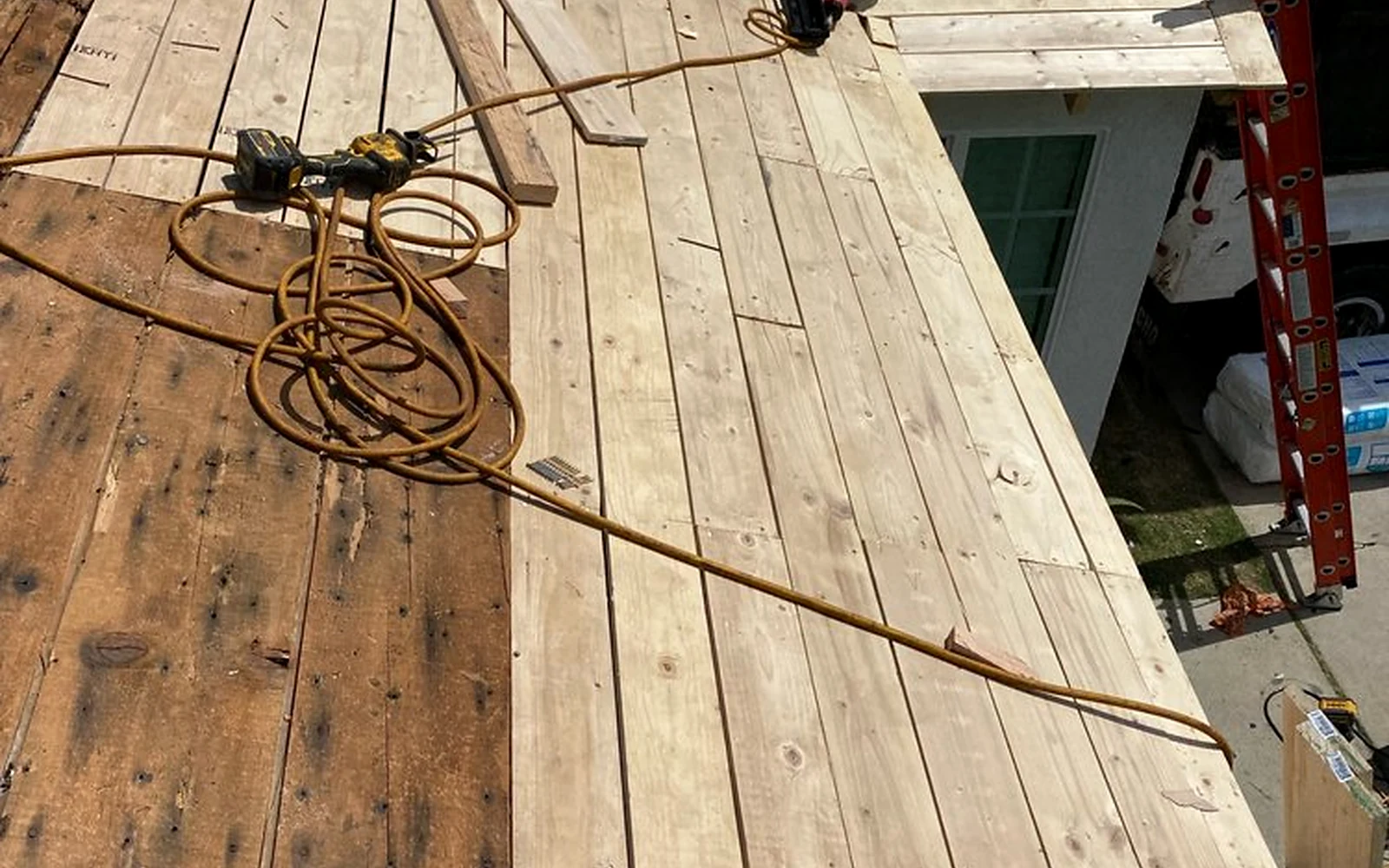
Concealed deck or framing conditions may not be fully known until roofing is removed. Ask how those findings will be photographed, priced, and presented for approval. The proposal should distinguish included work, allowances, unit prices where provided, and exclusions.
Discuss delivery access, tenant or household coordination, and scheduling assumptions. Availability, weather, material supply, and inspection findings can affect the sequence; an estimate should explain the assumptions rather than promise a universal duration.
Ask for the recommendation behind the proposal.
If the contractor recommends replacement, ask which documented findings make a limited repair unsuitable. If repair is recommended, ask why the retained materials can support it and what would warrant another inspection. A useful explanation connects the scope to the roof condition.
Review the roof replacement estimate checklist and documented project examples before discussing your own property with Sky Shield Roofing.
Request a scope you can compare.
Send the property details or call 888-331-3460. The team can discuss roof repair, replacement, or inspection needs during Monday–Friday office hours, 8:30 a.m.–5:30 p.m. Pacific. The office is closed on weekends.